Before I proceed with my post, allow me to set the context right ...
I am a fan of stories on political espionage and conspiracy theories. In my hey days (read teenage to young adult years), I would lock myself in my room for hours on end, voraciously devouring books by Robert Ludlum (The Parsifal Mosaic, The Materese Circle, The Acquitaine Progression, the Bourne trilogy: The Bourne Identity, The Bourne Supremacy & The Bourne Ultimatum, and many, many more) and Jeffrey Archer (A Matter of Honour, Honour Among Thieves).
These days, I'd rather sit in front of the idiot box or the silver screen and allow the story to unfold. It's a quicker process than reading the whole darn book; although watching takes the fun out of unravelling the mystery and the clues at every turn of the events. :) That was what kept me glued to the books previously. But then, I had more patience then. Talk about the MTV generation and having short attention span. Bet Cordy will agree that I have been vastly influenced by this generation.
I have digressed enough. Allow me to get on with my post. I came across this article "Malaysia's axis mysteriously shifting" on Asia Times Online and it got me thinking of all the possible conspiracy theories that could be built from this ... and then some. So I did some googling and voila! I found lots of stuff. True or false, ... guilty or innocent, ... I leave that to you to decide, my wise readers.
1. "... The 2004 proliferation case involving Scomi, a company owned by Abdullah's son Kamaluddin, which was allegedly involved in supplying dual-use technology to Libya's clandestine nuclear-weapons program. ..." Summary of the case and the outcome can be read here and here. The question is, IS there more here than meets the eye?
2. U.N Oil for Food Scandal. "New York - It began as a U.N. humanitarian aid program called "Oil-for-Food," but it ended up with Saddam Hussein (search) pocketing billions to become the biggest graft-generating machine ever and enriching some of America's most forceful opponents at the United Nations (search). ... " Read more here and here. And Malaysia's involvement in this? Read Raja Petra's account here.
3. The Altantunya Murder Trial. I confessed I haven't been following the trial but even a blind man could see that there is more here than meets the eye. Want to check out more premises for conspiracy theories? Read here. Although it was written almost two months ago, the blogger asked some interesting questions. Not enough to raise more flags? How about the following article written by Raja Petra.
It does make one pause and think, doesn't it? I remember an old idiom that goes, "there's no smoke without fire". Then again, a man is innocent until proven guilty.
Truth or lies? Guilt or innocence? Perhaps we will never know.
But these are surely great fodder for conspiracy theories. Time to write a book on one and earn millions. Perhaps be another Dan Brown in the making. All we need is one darn great book (ala Da Vinci Code) that creates enough interests and controversies that it becomes the talk-of-town. But make sure it's written under the "fiction" category so that you don't get sued (or hauled into ISA in this case).
Anyone up to the challenge of becoming the first Malaysian Dan Brown? :)
Showing posts with label politics conspiracies. Show all posts
Showing posts with label politics conspiracies. Show all posts
Tuesday, August 28, 2007


Monday, August 06, 2007
Should bloggers join politics?
Yes, I have finally surfaced on the blogosphere. This news is just too disturbing to let it pass.
When I first heard the news that Jeff Ooi is joining DAP, my reaction was negative.
Why?
Because I felt a teensy weensy bit betrayed.
Because his voice would now no longer be an "impartial" voice of the people. He would no longer be a regular Joe ... like you and me.
(I am using the word "impartial" here rather losely as no matter who we are, we can never be totally "impartial" as we would somehow be influenced by our environment and upbringing.)
Because by crossing over to politics, his say would no longer be his opinion. Party politics will come into play.
And yes, I would assume there would be conflict of interest.
And yes, I believe there would be political agenda behind his words.
As a friend said during a conversation on this, "Jeff Ooi would no longer be credible."
If I had wanted to know what DAP thought, I would have read Lim Kit Siang's blog.
At least that is what both of us felt.
What about you? Do you think bloggers should join politics?
When I first heard the news that Jeff Ooi is joining DAP, my reaction was negative.
Why?
Because I felt a teensy weensy bit betrayed.
Because his voice would now no longer be an "impartial" voice of the people. He would no longer be a regular Joe ... like you and me.
(I am using the word "impartial" here rather losely as no matter who we are, we can never be totally "impartial" as we would somehow be influenced by our environment and upbringing.)
Because by crossing over to politics, his say would no longer be his opinion. Party politics will come into play.
And yes, I would assume there would be conflict of interest.
And yes, I believe there would be political agenda behind his words.
As a friend said during a conversation on this, "Jeff Ooi would no longer be credible."
If I had wanted to know what DAP thought, I would have read Lim Kit Siang's blog.
At least that is what both of us felt.
What about you? Do you think bloggers should join politics?
Thursday, November 23, 2006
Have I (we) trusted the wrong man?
It's strange how fast fortunes can turn. The once almighty, unstoppable Tun Dr M must be asking himself the above question repeatedly. After all, not only has he been at the losing end of the battle for one-upmanship and power recently, so has his son.
But the more urgent questions should be asked by us, the faithful minority citizens of this country. Have we trusted the wrong man? Have we been fooled? Are we led by a wolf in sheep's clothing?
In the following article that appeared in the al-Jazeera's website, it provides an interesting view of the state of "racial" political affairs in Malaysia and the role of our PM in "creating" the differing impressions. To the uninitiated, al-Jazeera is the Arab satellite news station owned by the Qatari government since its foundation in 1996. It is the most popular source of news in the Arab world with a regular audience of between 35 and 50 million, and is a rare gem considering that it provides uninhibited reporting and free expression in a region where strict state control of the media is the norm.
The fact that the following article is published in this site provides a certain amount of credence, at least to me. Consider the article and you be the judge.
------------------------------------------------
NEWS ASIA-PACIFIC
Racial tensions on rise in Malaysia
By
Romen Bose, in Kuala Lumpur
Critics say Abdullah has failed to address "the plight of the other races". The Malaysian prime minister's warning to citizens to stop the debate on race and religion has rankled some in the country.
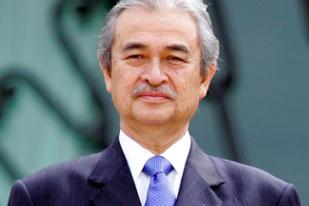
Abdullah Ahmad Badawi outlined the challenges faced by Malays, who form 60% of the population, in a two-hour speech to thundering applause at the opening of the United Malays National Organisation's (Umno) general assembly.
But while his speech promised much in terms of national development, the problem, according to Fazil Mohd Som, a political analyst, "is that it neglects the real issue at hand, which is the plight of the other races".
Abdullah is head of the Barisan Nasional coalition led by Umno and comprising the Indian-based MIC and the Chinese supported MCA, along with several other minor parties.
Liow Tiong Lai, the head of MCA's youth wing, said the statements made by young Malay leaders at the general assembly were vicious.
"It is regretful that the Umno youth assembly was shrouded in an atmosphere of fiery and emotional sentiments, remarks that were more poisonous and unreasonable than those of the opposition," said Liow, who is also a deputy minister in the Abdullah government.
Status quo
Abdullah's unwillingness to alter an unwritten social pact among the various races in the country has caused much consternation.
There have been many calls to revise this unofficial contract of political power distribution, which the founding fathers of Malaysia developed prior to independence in 1957.
Many today argue that the agreement is outdated and that non-Malays should have a greater say in the country.
Abdullah said in the English media that he wanted all races to work together, but his comments in the Malay-language Utusan Malaysia were stronger.
"If we change this balance and if we are forced to meet all over again on the rights of every group, it will not be the same as now. It would be far from satisfactory. Whatever the new formula, it will not succeed because the old formula is enough, is already maximum. As everyone had agreed to this before, why do we want to disturb this and meet again?" he said in the Utusan.
Playing to audience
Fazil said the prime minister was playing to his audience.
"People who read the English papers are middle class, rational thinkers and value logic. They expect a more moderate position and tone. He is saying the right thing to them. For the people who read the Malay papers, they are more the working class, more emotional and the points he is making to them is definitely much stronger. He is saying and doing the right things for them politically."
Malay Muslims make up 60 per cent of Malaysia's 27 million population.
Some non-Malays are also unhappy with the continued application of the country's New Economic Policy (NEP).
The NEP was implemented in the 1970s to reduce the income disparity among the different races, especially between the poor Malays and rich Chinese.
It was supposed to have been achieved in 20 years but the policy carried on after 1990 under a new name, the New Development Policy and was to have expired in 2000.
A National Vision Policy was to have been implemented after 2000 which would be more equitable to the various groups but the government under its 9th Malaysian Plan, launched earlier this year, reinstated the original NEP.
A huge debate then ensued over whether the NEP target had been reached with the government saying the NEP would now continue to 2020.
In his speech to the Umno general assembly, Abdullah said: "The debate is now about the process rather than about philosophy and objectives". He said his government will continue to "focus on reducing the income gap between races" as "true balance is a prerequisite for sustainable development".
Liow said the NEP "should have ended in 1990".
"Whatever policy is drawn up should take into account the interests of all races. I hope the government can honour its promise to implement the National Vision Policy."
Inter-faith commission
"... the nation understands that religious issues should not rightly be brought up. This is not on the agenda for discussion. Accept the formula that has been determined by previous leaders"
Abdullah Ahmad Badawi, Malaysian prime ministerAnother area under the spotlight is the setting up of an inter-faith commission. Various groups have been pushing for an independent body to examine issues that have given rise to conflict between the different religious groups.
Many Muslim groups have viewed this as an attack on their religion and there have been confrontations at several forums discussing the creation of such a commission.
Khoo Kay Peng, a political analyst, said the commission was initially rejected by other Umno leaders but Abdullah's attitude was to go slow, postpone discussion and see what happened. "He did not reject it offhand," said Khoo.
At least not in the English media.
In the interview with Utusan, he said: "Actually, I did not at any time say that we in Malaysia need an inter-faith commission. This is because I am of the view that in this country all of this is secure and the nation understands that religious issues should not rightly be brought up. This is not on the agenda for discussion. Accept the formula that has been determined by previous leaders."
Abdullah said that he has provided a "more open environment which has allowed debate but this has digressed to a level where the line on religion and race issues have been crossed".
"The openness we are seeing today is a new phenomenon for Malaysia", he said.
He added, however, that "no one should even attempt to test the government's resolve on this issue. If the need arises, the government will act swiftly and firmly in enforcing the existing laws to ensure that our peace, stability and prosperity is not jeopardised."
Fazil said Abdullah was playing "an old game".
"I think for the non-Malays they are in a cul de sac. Where else can they turn to? The only credible party that can win in elections is Umno and Umno is playing that card."
Said Khoo: "He has actually strengthened the people's perception of him. Many view him as an Islamist, as a real champion of the Malay agenda. He is not a Renaissance man as many thought previously."
Source: Al Jazeera
But the more urgent questions should be asked by us, the faithful minority citizens of this country. Have we trusted the wrong man? Have we been fooled? Are we led by a wolf in sheep's clothing?
In the following article that appeared in the al-Jazeera's website, it provides an interesting view of the state of "racial" political affairs in Malaysia and the role of our PM in "creating" the differing impressions. To the uninitiated, al-Jazeera is the Arab satellite news station owned by the Qatari government since its foundation in 1996. It is the most popular source of news in the Arab world with a regular audience of between 35 and 50 million, and is a rare gem considering that it provides uninhibited reporting and free expression in a region where strict state control of the media is the norm.
The fact that the following article is published in this site provides a certain amount of credence, at least to me. Consider the article and you be the judge.
------------------------------------------------
NEWS ASIA-PACIFIC
Racial tensions on rise in Malaysia
By
Romen Bose, in Kuala Lumpur
Critics say Abdullah has failed to address "the plight of the other races". The Malaysian prime minister's warning to citizens to stop the debate on race and religion has rankled some in the country.

Abdullah Ahmad Badawi outlined the challenges faced by Malays, who form 60% of the population, in a two-hour speech to thundering applause at the opening of the United Malays National Organisation's (Umno) general assembly.
But while his speech promised much in terms of national development, the problem, according to Fazil Mohd Som, a political analyst, "is that it neglects the real issue at hand, which is the plight of the other races".
Abdullah is head of the Barisan Nasional coalition led by Umno and comprising the Indian-based MIC and the Chinese supported MCA, along with several other minor parties.
Liow Tiong Lai, the head of MCA's youth wing, said the statements made by young Malay leaders at the general assembly were vicious.
"It is regretful that the Umno youth assembly was shrouded in an atmosphere of fiery and emotional sentiments, remarks that were more poisonous and unreasonable than those of the opposition," said Liow, who is also a deputy minister in the Abdullah government.
Status quo
Abdullah's unwillingness to alter an unwritten social pact among the various races in the country has caused much consternation.
There have been many calls to revise this unofficial contract of political power distribution, which the founding fathers of Malaysia developed prior to independence in 1957.
Many today argue that the agreement is outdated and that non-Malays should have a greater say in the country.
Abdullah said in the English media that he wanted all races to work together, but his comments in the Malay-language Utusan Malaysia were stronger.
"If we change this balance and if we are forced to meet all over again on the rights of every group, it will not be the same as now. It would be far from satisfactory. Whatever the new formula, it will not succeed because the old formula is enough, is already maximum. As everyone had agreed to this before, why do we want to disturb this and meet again?" he said in the Utusan.
Playing to audience
Fazil said the prime minister was playing to his audience.
"People who read the English papers are middle class, rational thinkers and value logic. They expect a more moderate position and tone. He is saying the right thing to them. For the people who read the Malay papers, they are more the working class, more emotional and the points he is making to them is definitely much stronger. He is saying and doing the right things for them politically."
Malay Muslims make up 60 per cent of Malaysia's 27 million population.
Some non-Malays are also unhappy with the continued application of the country's New Economic Policy (NEP).
The NEP was implemented in the 1970s to reduce the income disparity among the different races, especially between the poor Malays and rich Chinese.
It was supposed to have been achieved in 20 years but the policy carried on after 1990 under a new name, the New Development Policy and was to have expired in 2000.
A National Vision Policy was to have been implemented after 2000 which would be more equitable to the various groups but the government under its 9th Malaysian Plan, launched earlier this year, reinstated the original NEP.
A huge debate then ensued over whether the NEP target had been reached with the government saying the NEP would now continue to 2020.
In his speech to the Umno general assembly, Abdullah said: "The debate is now about the process rather than about philosophy and objectives". He said his government will continue to "focus on reducing the income gap between races" as "true balance is a prerequisite for sustainable development".
Liow said the NEP "should have ended in 1990".
"Whatever policy is drawn up should take into account the interests of all races. I hope the government can honour its promise to implement the National Vision Policy."
Inter-faith commission
"... the nation understands that religious issues should not rightly be brought up. This is not on the agenda for discussion. Accept the formula that has been determined by previous leaders"
Abdullah Ahmad Badawi, Malaysian prime ministerAnother area under the spotlight is the setting up of an inter-faith commission. Various groups have been pushing for an independent body to examine issues that have given rise to conflict between the different religious groups.
Many Muslim groups have viewed this as an attack on their religion and there have been confrontations at several forums discussing the creation of such a commission.
Khoo Kay Peng, a political analyst, said the commission was initially rejected by other Umno leaders but Abdullah's attitude was to go slow, postpone discussion and see what happened. "He did not reject it offhand," said Khoo.
At least not in the English media.
In the interview with Utusan, he said: "Actually, I did not at any time say that we in Malaysia need an inter-faith commission. This is because I am of the view that in this country all of this is secure and the nation understands that religious issues should not rightly be brought up. This is not on the agenda for discussion. Accept the formula that has been determined by previous leaders."
Abdullah said that he has provided a "more open environment which has allowed debate but this has digressed to a level where the line on religion and race issues have been crossed".
"The openness we are seeing today is a new phenomenon for Malaysia", he said.
He added, however, that "no one should even attempt to test the government's resolve on this issue. If the need arises, the government will act swiftly and firmly in enforcing the existing laws to ensure that our peace, stability and prosperity is not jeopardised."
Fazil said Abdullah was playing "an old game".
"I think for the non-Malays they are in a cul de sac. Where else can they turn to? The only credible party that can win in elections is Umno and Umno is playing that card."
Said Khoo: "He has actually strengthened the people's perception of him. Many view him as an Islamist, as a real champion of the Malay agenda. He is not a Renaissance man as many thought previously."
Source: Al Jazeera
Monday, November 13, 2006
The truth is out there!
The recent (alleged) brutal murder of a Mongolian model has left the nation in horror and truth be told (and apologies to the victim and her family) in fascination.
Alleged because till today, forensics have yet to confirm that the bone fragments belong to the said model.
Horror because despite some really sensational nasty crimes in recent years, nothing thus far has reached this magnitude.
And by the same token, fascination because the world that we inhabit has not been touched by such "evil".
Therefore, it is of no surprise that the crime has been "the talk of the town" and has captured the imagination of the nation.
And as the story unfolds, the following questions plague our minds:
1. Was the (alleged) accused blackmailed?
2. Why should the (alleged) victim be killed in such a manner? Isn't there an easier and less messy way out?
3. Why involve persons of authority?
4. Who tipped the authorities?
5. Is there a cover up?
Conspiracy theories began to form even before new evidence are found and released for public consumption. In a recent gathering with friends, budding conspiracy theorists had put forth their versions for discussion.
Disclaimer: Please note that these are just conspiracy theories that hold no truth of evidence whatsoever. Read for the pleasure of imaginations gone wild.
Conspiracy Theory #1
The (alleged) victim demanded/blackmailed the (alleged) accused. In a heated argument, he accidentally killed the woman. Fearing discovery, he quickly called in reinforcements to help him dispose the body. However, this theory has lots of loopholes.
1. Does he have that much influence over people of such authority to do the dirty job?
2. Why choose such a drastic way to dispose the body which could clearly point back to the source?
For an intelligent man (i.e. the alleged accused), why would he act so stupidly in covering up a crime?
Conspiracy Theory #2
The (alleged) accused is made a scapegoat for a huge cover-up for a high ranking official. The high ranking official could have used the (alleged) accused premises to have a lover's tryst but ended up committing a crime of passion when the (alleged) victim threatened him. As in theory #1, the high ranking official then seeked the assistance of people of authority to help dispose the body. However, the question still remain, why use such an obvious method (i.e. C4 explosives) to dispose the body? And could he have summoned up these people of authority so quickly to do the dirty deed?
Conspiracy Theory #3
As in theory #2, instead of an accidental crime of passion, it could be premeditated. The (alleged) victim could have blackmailed the high ranking official. To safeguard his position, he could have planned the murder and called in the people of authority to execute the crime. He could have told the (alleged) accused that he needed to use the (alleged) accused premise as a point for a lover's tryst, but unbeknownst to the (alleged) accused, the official could have planned the crime and the cover up as well. Again, the question of why use such an obvious method of disposal that would clearly point back to the (alleged) victim's executioner? Even if he could cover his tracks by implicating the (alleged) accused, the truth would eventually surface by virtue of the fact that he used the people of authority to dispose the (alleged) victim. Pretty weak planning for one to commit such a crime, don't you think? It'd be easier for him to get away with it without involving these folks.
Conspiracy Theory #4
The (alleged) victim was a spy. She was on a secret mission and was supposed to meet her contact at the (alleged) accused premise. The (alleged) accused was not aware that his premise was used as a meeting place to pass on secret information amongst the spies. Unfortunately, something nasty happened. The (alleged) victim was double crossed and found herself at the wrong end of the gun. She was carrying some secret codes on her personal self which could be detrimental to world peace. And despite a thorough body search, nothing could be found on her. Fearing that the bad guys could get ahold of these codes on her body, the powers that be decided to blow up the body to get rid of the codes. Far fetched as this might sound, at least there is an obvious reason why the body was blown apart.
Now there ... the last conspiracy theory sounds like it. It has all the stamp of a Hollywood movie ... likely due to the influence of The Bourne Identity, The Departed, Alias, ... you name it!
Conspiracy theories anyone?
Alleged because till today, forensics have yet to confirm that the bone fragments belong to the said model.
Horror because despite some really sensational nasty crimes in recent years, nothing thus far has reached this magnitude.
And by the same token, fascination because the world that we inhabit has not been touched by such "evil".
Therefore, it is of no surprise that the crime has been "the talk of the town" and has captured the imagination of the nation.
And as the story unfolds, the following questions plague our minds:
1. Was the (alleged) accused blackmailed?
2. Why should the (alleged) victim be killed in such a manner? Isn't there an easier and less messy way out?
3. Why involve persons of authority?
4. Who tipped the authorities?
5. Is there a cover up?
Conspiracy theories began to form even before new evidence are found and released for public consumption. In a recent gathering with friends, budding conspiracy theorists had put forth their versions for discussion.
Disclaimer: Please note that these are just conspiracy theories that hold no truth of evidence whatsoever. Read for the pleasure of imaginations gone wild.
Conspiracy Theory #1
The (alleged) victim demanded/blackmailed the (alleged) accused. In a heated argument, he accidentally killed the woman. Fearing discovery, he quickly called in reinforcements to help him dispose the body. However, this theory has lots of loopholes.
1. Does he have that much influence over people of such authority to do the dirty job?
2. Why choose such a drastic way to dispose the body which could clearly point back to the source?
For an intelligent man (i.e. the alleged accused), why would he act so stupidly in covering up a crime?
Conspiracy Theory #2
The (alleged) accused is made a scapegoat for a huge cover-up for a high ranking official. The high ranking official could have used the (alleged) accused premises to have a lover's tryst but ended up committing a crime of passion when the (alleged) victim threatened him. As in theory #1, the high ranking official then seeked the assistance of people of authority to help dispose the body. However, the question still remain, why use such an obvious method (i.e. C4 explosives) to dispose the body? And could he have summoned up these people of authority so quickly to do the dirty deed?
Conspiracy Theory #3
As in theory #2, instead of an accidental crime of passion, it could be premeditated. The (alleged) victim could have blackmailed the high ranking official. To safeguard his position, he could have planned the murder and called in the people of authority to execute the crime. He could have told the (alleged) accused that he needed to use the (alleged) accused premise as a point for a lover's tryst, but unbeknownst to the (alleged) accused, the official could have planned the crime and the cover up as well. Again, the question of why use such an obvious method of disposal that would clearly point back to the (alleged) victim's executioner? Even if he could cover his tracks by implicating the (alleged) accused, the truth would eventually surface by virtue of the fact that he used the people of authority to dispose the (alleged) victim. Pretty weak planning for one to commit such a crime, don't you think? It'd be easier for him to get away with it without involving these folks.
Conspiracy Theory #4
The (alleged) victim was a spy. She was on a secret mission and was supposed to meet her contact at the (alleged) accused premise. The (alleged) accused was not aware that his premise was used as a meeting place to pass on secret information amongst the spies. Unfortunately, something nasty happened. The (alleged) victim was double crossed and found herself at the wrong end of the gun. She was carrying some secret codes on her personal self which could be detrimental to world peace. And despite a thorough body search, nothing could be found on her. Fearing that the bad guys could get ahold of these codes on her body, the powers that be decided to blow up the body to get rid of the codes. Far fetched as this might sound, at least there is an obvious reason why the body was blown apart.
Now there ... the last conspiracy theory sounds like it. It has all the stamp of a Hollywood movie ... likely due to the influence of The Bourne Identity, The Departed, Alias, ... you name it!
Conspiracy theories anyone?
Wednesday, November 08, 2006
How do I love thee NOT?
I don't think there is much to rejoice these days when we read the local news. Perhaps we should just quit reading the newspapers altogether. Then we will feel more like we are citizens of this country that we love and perhaps we will respect the governing body more. But with each dawning day, one can't help but feel a little bit more disillusioned. Another ideal bites the dust!
Here is a satirical spin to Elizabeth Barrett Browning's (1806-1861) poem, "How do I love thee? Let me count the ways..."
How do I love thee NOT? Let me count the ways.
I love thee NOT for the slipping ranks of the graft index
Where the filthy rich gets richer without paying tax
Where councillors build "palaces" without approval
And got away with resignations and mere disapproval
I love thee NOT for the way the ASLI report was being handled
Where the core issues were dismissed and were not being tackled
Where politicians sparked off a racial storm with their verbal diarrhea
Over the much beleaguered, much debated rising bumi percentages
I love thee NOT for the levels of issues raised
Where every issue becomes a matter of race
From meritocracy in education to double festive celebration
Is this how we are going to build a strong nation?
I love thee NOT to the depths of the stupid remarks made
By seemingly moronic reps that form the government parade
But worse it is when spouted by an "Oxford graduate"
Remorseless he was in his insinuation that sparked off a racial debate.
I love thee NOT for countless other transgressions
The latest being the issue of Bangsa Malaysia
Yet, like a battered wife I return for more transgressions
And like an addict, I love thee with an unexplainable passion.
Here is a satirical spin to Elizabeth Barrett Browning's (1806-1861) poem, "How do I love thee? Let me count the ways..."
How do I love thee NOT? Let me count the ways.
I love thee NOT for the slipping ranks of the graft index
Where the filthy rich gets richer without paying tax
Where councillors build "palaces" without approval
And got away with resignations and mere disapproval
I love thee NOT for the way the ASLI report was being handled
Where the core issues were dismissed and were not being tackled
Where politicians sparked off a racial storm with their verbal diarrhea
Over the much beleaguered, much debated rising bumi percentages
I love thee NOT for the levels of issues raised
Where every issue becomes a matter of race
From meritocracy in education to double festive celebration
Is this how we are going to build a strong nation?
I love thee NOT to the depths of the stupid remarks made
By seemingly moronic reps that form the government parade
But worse it is when spouted by an "Oxford graduate"
Remorseless he was in his insinuation that sparked off a racial debate.
I love thee NOT for countless other transgressions
The latest being the issue of Bangsa Malaysia
Yet, like a battered wife I return for more transgressions
And like an addict, I love thee with an unexplainable passion.
Thursday, November 02, 2006
And the Saga continues
People in positions of power should NOT abuse the power and mandate given to them, or so that should be the case. But then, reality is far from ideal. And over the centuries, we have seen enough of power abuses. After all, "absolute power corrupts absolutely".
In the case of UMNO Klang division chief Datuk Zakaria Md Deros, who is also a councillor in the Klang Municipal Council (MPK), he was probably one of the unlucky few who DID NOT get away with it. As a friend gleefully ranted in his blog, Justice is served... FINALLY!, not only was Datuk Z called to task for the above transgression, he had several other transgressions lined across his belt! He further lay the blame for the non-submission of building plans squarely on his architect's shoulders. Now, isn't that the epitome of a "highly respected exemplary leader" who lays blame elsewhere for his transgression?
One wonders how he could have gotten away with all these transgressions over the years. Hello?! Is someone sleeping on the job? Shouldn't that person be called to task for letting such a huge error escape his attention? It boggles the mind that no one noticed! Or are there a whole can of worms behind this saga? Perhaps, those who kept silent had reasons doing so ... I leave that to your own interpretation. Thus far, two more councillors have been identified for the same transgression. Would more be coming out of the woodwork? And yet another one lay the blame at the feet of his architect. But at least, he took responsibility for the act and resigned.
So, what next? Building plans are still not forthcoming. Is there a deadline for submission? Would the transgressors be further penalised? Are more investigations underway? What are the punishment/ penalty for the transgressors other than stop work on the buildings while awaiting approval? Should they still continue to serve as councillors?
Or as with all "hot news", would all these blow over with no answers after a few weeks of being headlined in the papers? The slow arm of law and laidback government bureaucracy strikes yet again when dealing with issues such as these.
In the case of UMNO Klang division chief Datuk Zakaria Md Deros, who is also a councillor in the Klang Municipal Council (MPK), he was probably one of the unlucky few who DID NOT get away with it. As a friend gleefully ranted in his blog, Justice is served... FINALLY!, not only was Datuk Z called to task for the above transgression, he had several other transgressions lined across his belt! He further lay the blame for the non-submission of building plans squarely on his architect's shoulders. Now, isn't that the epitome of a "highly respected exemplary leader" who lays blame elsewhere for his transgression?
One wonders how he could have gotten away with all these transgressions over the years. Hello?! Is someone sleeping on the job? Shouldn't that person be called to task for letting such a huge error escape his attention? It boggles the mind that no one noticed! Or are there a whole can of worms behind this saga? Perhaps, those who kept silent had reasons doing so ... I leave that to your own interpretation. Thus far, two more councillors have been identified for the same transgression. Would more be coming out of the woodwork? And yet another one lay the blame at the feet of his architect. But at least, he took responsibility for the act and resigned.
So, what next? Building plans are still not forthcoming. Is there a deadline for submission? Would the transgressors be further penalised? Are more investigations underway? What are the punishment/ penalty for the transgressors other than stop work on the buildings while awaiting approval? Should they still continue to serve as councillors?
Or as with all "hot news", would all these blow over with no answers after a few weeks of being headlined in the papers? The slow arm of law and laidback government bureaucracy strikes yet again when dealing with issues such as these.
Sunday, October 15, 2006
The irony of racial discrimination
Random conversation
Me: Do you realise how the issue of race seems to be popping up more frequently in the news these days? I just can't understand why everything has to be about race. How can we claim to live harmoniously and tolerant of other races and religions when every time something goes wrong, the first thing that's brought up is race or religion!
Friend: That's the beauty of Malaysian politics. I was reading an article on the quota system and discrimination recently and it struck me the irony of the situation we are in.
Me: What do you mean? What situation?
Friend: Recently, we ran an essay competition in one of our workshops for teenagers. And we were supposed to pick the top 3 winners. When we realised that all the winners picked were Chinese, we had to go back, check on the names and re-select a Malay and an Indian winner. And since there was only 1 Indian, she won the prize. But the two poor Chinese girls who didn't get the prize was not because they aren't good, it's because they are Chinese!
Me: See ... why should everything be about race? That's what I can't understand
Friend: I thought it was sooooo unfair! But I can't argue with the other committee members. It was something "non racial" when we "blindly" selected the top 3. But to appear "un racist"... we had to reselect... based on their race!!!!!!
Me: I can see where you are going with that. You had to do something racial so as to appear non racial. And that's the irony of racial discrimination!
Me: Do you realise how the issue of race seems to be popping up more frequently in the news these days? I just can't understand why everything has to be about race. How can we claim to live harmoniously and tolerant of other races and religions when every time something goes wrong, the first thing that's brought up is race or religion!
Friend: That's the beauty of Malaysian politics. I was reading an article on the quota system and discrimination recently and it struck me the irony of the situation we are in.
Me: What do you mean? What situation?
Friend: Recently, we ran an essay competition in one of our workshops for teenagers. And we were supposed to pick the top 3 winners. When we realised that all the winners picked were Chinese, we had to go back, check on the names and re-select a Malay and an Indian winner. And since there was only 1 Indian, she won the prize. But the two poor Chinese girls who didn't get the prize was not because they aren't good, it's because they are Chinese!
Me: See ... why should everything be about race? That's what I can't understand
Friend: I thought it was sooooo unfair! But I can't argue with the other committee members. It was something "non racial" when we "blindly" selected the top 3. But to appear "un racist"... we had to reselect... based on their race!!!!!!
Me: I can see where you are going with that. You had to do something racial so as to appear non racial. And that's the irony of racial discrimination!
Friday, October 13, 2006
Have “we” been looking at the problem the wrong way?
It is amazing how one study can create such drama, strong emotions, accusations, reactions, debates … the list goes on! Of course I am referring to the “controversial” study by Asian Strategy and Leadership Institute’s (Asli) Centre for Public Policy studies, which found that bumiputra corporate equity ownership could be as high as 45%, instead of the government’s figure of 18.9%.
While a political figure flew off the handle and called the study “irresponsible”, “rubbish”, “useless” and “has an ulterior motive”, and subsequently, the president of the institute retracted the report stating that the calculations and assumptions used were faulty (some parties were of the opinion that the retraction was due to pressure), and then the head of Centre for Public Policy Studies resigned because of "... the need to defend the position and integrity of independent and non-partisan scholarship", the entire point has been missed! It is not about percentages and race! If I remember my Pengajian Am correctly, both Buku Hijau (The Green Book) and the New Economic Policy (NEP) have two core objectives i.e. to eradicate poverty regardless of race and restructure society so as to eliminate race identification with economic function.
I agree wholeheartedly with Zainon Ahmad’s sentiments in his recent column “What They Say” in The Sun dated Tuesday October 10, 2006. The title of the article, “What have ratios got to do with need?” The following excerpt from the article makes a lot of sense.
“Zain: Actually I do not understand this obsession with whether the 30% equity has been achieved or not. Ok, so it is 18 something per cent or 45%. So what. Meaningless. Take the Indian ownership for example. They are supposed to be owning 3%.”
“Mohan: Two Indians may be owning it all!”
“Zain: Exactly. So it is the income disparity that needs to be looked at – and across racial lines …”
Very well said. What has race got to do with being poor? Instead of using race as a yardstick, the criteria should be the definition of poverty and all Malaysians who fall within that definition should be given assistance.
The criteria and the implementation of the policy should also be looked into i.e. is the assistance given to the “wrong” group of people? For example, is the assistance given to really poor Malays as opposed to average/ rich ones? I remember meeting a number of Malay students who were on government loans or scholarships, but yet have cars and drive to the university. (This was more than 10 years ago.) The questions that begged to be asked then were:
1) Isn’t assistance supposed to be given to the poor?
2) What is the definition of poor? (Obviously not those who can afford to drive to the university.)
It is interesting to note that when the NEP ended in 1990, official figures showed that Malay corporate equity ownership was only between 19% and 20%. But the NEP was then extended under a new name, the National Development Policy (NDP). Now, sixteen years later, the government numbers showed not an increase but a slight drop to 18.9% of Malay corporate equity ownership. Despite the billions spent, there seemed to be no improvements. Therefore, if this is the true percentage claimed by the Economic Planning Unit (EPU), shouldn't the more urgent action be to enquire why the results were so dismal after 16 years (instead of arguing over the methodology)? The parties concerned should be asking the following questions instead.
1) To whom did the money go to? Did it go to the right people i.e. the poor?
2) Was the money lost in transmission i.e. did the middle man swallow part of the money?
3) What was the money used for? Were they effective spending?
And so on and so forth ...
It is only when all these have been reviewed that the shortfalls of the policies can be corrected/ amended. What’s the point of continuing decade after decade, policy name change after policy name change if vast improvements cannot be observed? After all, even for social funding, the social return on investment (ROI) should be measured. Otherwise, it is a total waste of taxpayers’ money.
Finally, a wise man once said, “Give a man a fish, he eats for a day. Teach a man to fish, he eats for a life time.” Are there policies and programmes in place to “teach” these people to “fish”? If not, then the giving of “fish” would be tantamount to breeding laziness and expectations that the government/country owes them a living.
It’s like the unemployment policy in Australia where one can collect “dole” from the government if unemployed. According to a friend of mine, this is where the policy breeds laziness among the young adults as they continue to live at home and rely on their parents’ goodwill for food and lodging, while they collect enough “dole” to enjoy life. There was no need for them to look for a job.
Therefore, have “we” not been looking at the problem the wrong way all this while? First, understand the root cause of the problem and acknowledge that it exists (and not jump the gun on something else), then review the current policies, actions and loopholes, and then plug in all the loopholes and resolve the problem, while putting in place check and balances to ensure that all actions drive towards the core objectives.
Sounds rational and logical right?! But then, I am no politician. : )
While a political figure flew off the handle and called the study “irresponsible”, “rubbish”, “useless” and “has an ulterior motive”, and subsequently, the president of the institute retracted the report stating that the calculations and assumptions used were faulty (some parties were of the opinion that the retraction was due to pressure), and then the head of Centre for Public Policy Studies resigned because of "... the need to defend the position and integrity of independent and non-partisan scholarship", the entire point has been missed! It is not about percentages and race! If I remember my Pengajian Am correctly, both Buku Hijau (The Green Book) and the New Economic Policy (NEP) have two core objectives i.e. to eradicate poverty regardless of race and restructure society so as to eliminate race identification with economic function.
I agree wholeheartedly with Zainon Ahmad’s sentiments in his recent column “What They Say” in The Sun dated Tuesday October 10, 2006. The title of the article, “What have ratios got to do with need?” The following excerpt from the article makes a lot of sense.
“Zain: Actually I do not understand this obsession with whether the 30% equity has been achieved or not. Ok, so it is 18 something per cent or 45%. So what. Meaningless. Take the Indian ownership for example. They are supposed to be owning 3%.”
“Mohan: Two Indians may be owning it all!”
“Zain: Exactly. So it is the income disparity that needs to be looked at – and across racial lines …”
Very well said. What has race got to do with being poor? Instead of using race as a yardstick, the criteria should be the definition of poverty and all Malaysians who fall within that definition should be given assistance.
The criteria and the implementation of the policy should also be looked into i.e. is the assistance given to the “wrong” group of people? For example, is the assistance given to really poor Malays as opposed to average/ rich ones? I remember meeting a number of Malay students who were on government loans or scholarships, but yet have cars and drive to the university. (This was more than 10 years ago.) The questions that begged to be asked then were:
1) Isn’t assistance supposed to be given to the poor?
2) What is the definition of poor? (Obviously not those who can afford to drive to the university.)
It is interesting to note that when the NEP ended in 1990, official figures showed that Malay corporate equity ownership was only between 19% and 20%. But the NEP was then extended under a new name, the National Development Policy (NDP). Now, sixteen years later, the government numbers showed not an increase but a slight drop to 18.9% of Malay corporate equity ownership. Despite the billions spent, there seemed to be no improvements. Therefore, if this is the true percentage claimed by the Economic Planning Unit (EPU), shouldn't the more urgent action be to enquire why the results were so dismal after 16 years (instead of arguing over the methodology)? The parties concerned should be asking the following questions instead.
1) To whom did the money go to? Did it go to the right people i.e. the poor?
2) Was the money lost in transmission i.e. did the middle man swallow part of the money?
3) What was the money used for? Were they effective spending?
And so on and so forth ...
It is only when all these have been reviewed that the shortfalls of the policies can be corrected/ amended. What’s the point of continuing decade after decade, policy name change after policy name change if vast improvements cannot be observed? After all, even for social funding, the social return on investment (ROI) should be measured. Otherwise, it is a total waste of taxpayers’ money.
Finally, a wise man once said, “Give a man a fish, he eats for a day. Teach a man to fish, he eats for a life time.” Are there policies and programmes in place to “teach” these people to “fish”? If not, then the giving of “fish” would be tantamount to breeding laziness and expectations that the government/country owes them a living.
It’s like the unemployment policy in Australia where one can collect “dole” from the government if unemployed. According to a friend of mine, this is where the policy breeds laziness among the young adults as they continue to live at home and rely on their parents’ goodwill for food and lodging, while they collect enough “dole” to enjoy life. There was no need for them to look for a job.
Therefore, have “we” not been looking at the problem the wrong way all this while? First, understand the root cause of the problem and acknowledge that it exists (and not jump the gun on something else), then review the current policies, actions and loopholes, and then plug in all the loopholes and resolve the problem, while putting in place check and balances to ensure that all actions drive towards the core objectives.
Sounds rational and logical right?! But then, I am no politician. : )
If you think you are being marginalised, then consider the plight of the Chinese in Brunei
While the debate/ argument/ bickering rages on over the statement made by Singapore’s former Premier Lee Kuan Yew regarding the marginalisation of the Malaysian Chinese, I was shocked to discover the plight of the Chinese in Brunei.
According to my Brunei distributor, the Chinese in Brunei faces by far, a worse situation.
Did you know that …
1) A Chinese in Brunei can only claim PR status but not citizenship, even if he/she is a second or third or forth (and so on) generation Chinese born and bred there!
2) A Chinese in Brunei have to pass an exam conducted in Malay to claim citizenship. And passing the exam is subject to a minimum yearly quota.
3) A Chinese in Brunei (who is not a citizen) carries a PR passport and have to apply for visa for whichever country they visit even West Malaysia (except for Sabah, Sarawak and Singapore).
4) A Chinese in Brunei (who is not a citizen) do not have the right to own land in the country.
Now, that would have been bad enough but it seems that there are people in Brunei who are even worse off!
Did you know that …
1) There are groups of Chinese and ethnic minorities (i.e. Iban, etc) in Brunei who are considered “stateless” people. This came about due to their parents’ (who happened to be East Malaysians who went across the border to work) ignorance! These Malaysian parents were ignorant over the fact that if their children were born in Brunei and if the parents did not register the birth with the Malaysian nor the Brunei government, then these children will be considered “stateless” as Brunei would not grant them citizenship nor PR even though they were born and bred there.
2) These “stateless” people are not given a passport. They live in the country on work permits which in turn allow them very limited travel i.e. within Brunei, Sabah and Sarawak.
I extracted the below from the US State Government website.
Brunei
Country Reports on Human Rights Practices - 2005
Released by the Bureau of Democracy, Human Rights, and Labor
March 8, 2006
National/Racial/Ethnic Minorities
There were a sizeable number of "stateless" persons and permanent residents, mostly ethnic Chinese, including persons born and raised in the country, who were not automatically accorded citizenship and its attendant rights. They had to travel abroad as stateless persons and did not enjoy the full privileges of citizenship, including the right to own land. Stateless persons and permanent residents also were not entitled to subsidized medical care. In 2003 a reform to the nationality law allowed some older, stateless persons and some permanent residents over age 50 to acquire citizenship by passing an oral rather than a written nationality test. All stateless persons and permanent residents became entitled to free education at government schools and other vocational and technical institutions. During the year 680 persons were granted citizenship, including more than 150 children.
How about that?! It is no wonder the Chinese is a shrinking population in Brunei. Year on year the migration level is high among the Chinese population. Currently, Chinese form approximately 15% of the country’s population.
So the next time you think you have been marginalised, consider the plight of the Chinese in Brunei!
According to my Brunei distributor, the Chinese in Brunei faces by far, a worse situation.
Did you know that …
1) A Chinese in Brunei can only claim PR status but not citizenship, even if he/she is a second or third or forth (and so on) generation Chinese born and bred there!
2) A Chinese in Brunei have to pass an exam conducted in Malay to claim citizenship. And passing the exam is subject to a minimum yearly quota.
3) A Chinese in Brunei (who is not a citizen) carries a PR passport and have to apply for visa for whichever country they visit even West Malaysia (except for Sabah, Sarawak and Singapore).
4) A Chinese in Brunei (who is not a citizen) do not have the right to own land in the country.
Now, that would have been bad enough but it seems that there are people in Brunei who are even worse off!
Did you know that …
1) There are groups of Chinese and ethnic minorities (i.e. Iban, etc) in Brunei who are considered “stateless” people. This came about due to their parents’ (who happened to be East Malaysians who went across the border to work) ignorance! These Malaysian parents were ignorant over the fact that if their children were born in Brunei and if the parents did not register the birth with the Malaysian nor the Brunei government, then these children will be considered “stateless” as Brunei would not grant them citizenship nor PR even though they were born and bred there.
2) These “stateless” people are not given a passport. They live in the country on work permits which in turn allow them very limited travel i.e. within Brunei, Sabah and Sarawak.
I extracted the below from the US State Government website.
Brunei
Country Reports on Human Rights Practices - 2005
Released by the Bureau of Democracy, Human Rights, and Labor
March 8, 2006
National/Racial/Ethnic Minorities
There were a sizeable number of "stateless" persons and permanent residents, mostly ethnic Chinese, including persons born and raised in the country, who were not automatically accorded citizenship and its attendant rights. They had to travel abroad as stateless persons and did not enjoy the full privileges of citizenship, including the right to own land. Stateless persons and permanent residents also were not entitled to subsidized medical care. In 2003 a reform to the nationality law allowed some older, stateless persons and some permanent residents over age 50 to acquire citizenship by passing an oral rather than a written nationality test. All stateless persons and permanent residents became entitled to free education at government schools and other vocational and technical institutions. During the year 680 persons were granted citizenship, including more than 150 children.
How about that?! It is no wonder the Chinese is a shrinking population in Brunei. Year on year the migration level is high among the Chinese population. Currently, Chinese form approximately 15% of the country’s population.
So the next time you think you have been marginalised, consider the plight of the Chinese in Brunei!
Friday, March 10, 2006
Demonstration at KLCC
The gathering crowd
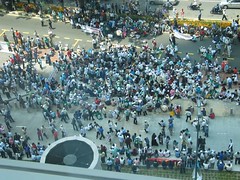
The recent fuel price increase has proven perhaps too much for the rakyat. At approximately 2.30pm today, a crowd gathered in front of KLCC to protest the recent fuel price increase of 30 sen per litre. This is the second demonstration since last Friday although that demonstration did not appear on national TV or national news.
It was a peaceful demonstration by the rakyat holding banners in protest of the price increase. The FRUs were at the scene of the demonstration and there were press taking photographs although I suspect these were foreign press. A helicopter also hovered around the building during the period of the protest. Looking at the various banners, it was obvious that the demonstration was led by the opposition. The people were carrying PAS and Keadilan flags and banners. There was a spokesman speaking through the hailer although we were unable to hear much of what was said.
The protest lasted perhaps about an hour to an hour and the half before the crowd dispersed.
Below are three messages seen on the banners:
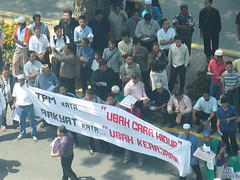
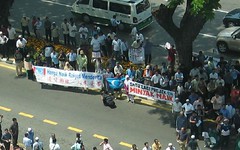
The recent fuel price increase has proven perhaps too much for the rakyat. At approximately 2.30pm today, a crowd gathered in front of KLCC to protest the recent fuel price increase of 30 sen per litre. This is the second demonstration since last Friday although that demonstration did not appear on national TV or national news.
It was a peaceful demonstration by the rakyat holding banners in protest of the price increase. The FRUs were at the scene of the demonstration and there were press taking photographs although I suspect these were foreign press. A helicopter also hovered around the building during the period of the protest. Looking at the various banners, it was obvious that the demonstration was led by the opposition. The people were carrying PAS and Keadilan flags and banners. There was a spokesman speaking through the hailer although we were unable to hear much of what was said.
The protest lasted perhaps about an hour to an hour and the half before the crowd dispersed.
Below are three messages seen on the banners:
Subscribe to:
Posts (Atom)

